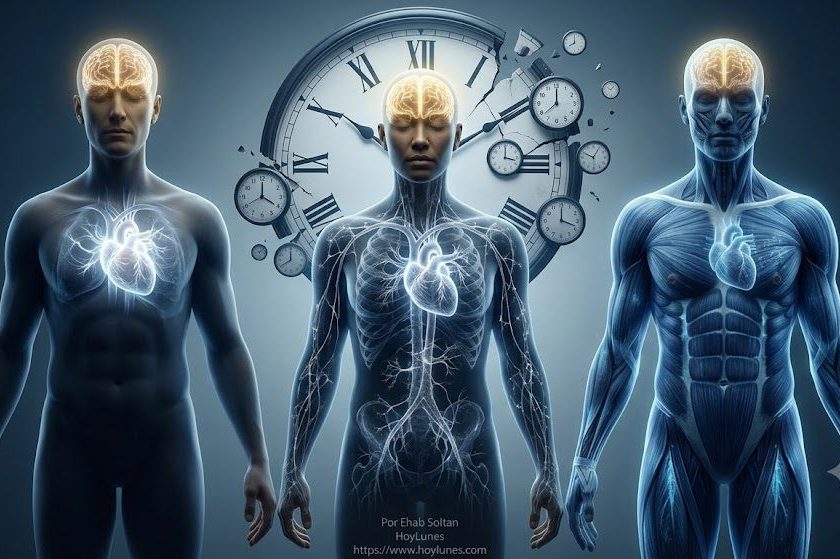

It is not a lack of willpower, it is biological misalignment. How poor nocturnal sleep quality dismantles your body’s ability to manage energy and self-control, redefining metabolic health in 2026.
By Ehab Soltan
HoyLunes — There is a physiological phenomenon that thousands of people experience… and almost everyone misinterprets.
It is five o’clock in the afternoon. You have not eaten poorly. You have tried to maintain control. And yet, an irrepressible biological impulse arises: you need rapid-absorption glucose. It is not a mild preference: it is a system that has lost the ability to manage its reserves.
The conventional explanation is as comfortable as it is erroneous: we blame ourselves for a supposed lack of discipline, for stress, or for a poor routine. But in 2026, that reading is no longer sufficient, because science has demonstrated that “willpower” is a finite biological resource, not a moral quality.
The reality is more uncomfortable: you are not making a bad decision — your body is executing a decision it made for you hours earlier, while you were sleeping.

The Invisible Mechanism: Nocturnal Metabolic Misalignment
For decades, we have simplified metabolism into an equation of calories, believing that it is just “burning what you eat.” This view is incomplete. Metabolism is a complex clock that regulates when and how energy is used.
The organism is not a sum of organs; it is a synchronized system whose adjustment occurs during the night. It is when the orchestra tunes its instruments.
When sleep architecture is correct:
The nervous system recalibrates the stress response.
The metabolism adjusts insulin sensitivity.
The prefrontal brain recovers executive control.
When you sleep poorly, you do not simply experience “tiredness”. It is not tiredness: it is biological decompensation. A nocturnal metabolic misalignment zoccurs.
The orchestra’s instruments begin to play each on their own. The system enters into conflict, sending contradictory signals: you feel stressed when you should be calm, and you are hungry when you should be satiated.
It Is Not Hunger: It Is a Loss of Biological Governance
The classic narrative obsesses over two hormones: leptin (satiety) and ghrelin (hunger). Yes, their levels diverge after a bad night, but that does not explain the irrational urgency of 5:00 PM.
The real problem is this: the body loses its capacity for anticipation and homeostatic control. Your system loses track of how much energy it actually needs and enters into energetic panic.
This translates into three measurable physiological mechanisms:
Hyperreactivity of the reward systems. These systems become hyperreactive: you only want sugar and fat, and you want them NOW.
Hypoactivity of executive control. The rational part of your brain that says “this is not good for me” is turned off or very weak.
Increase in allostatic load. Any small problem of the day stresses you out much more, and stress leads you to eat poorly, which prevents you from sleeping well, closing a pathological vicious cycle.
You do not eat more because you have more real hunger for nutrients.
You eat more because your nervous system has stopped correctly prioritizing energy management and has entered survival mode. And it forces you to eat the most caloric option possible to survive, even if you are sitting in an office.

The Turning Point After 40: Less Margin, Not Less Capacity
This is where biology becomes decisive. Age is not an excuse, it is a biological factor that changes the rules of the game. It is not that “hormones get worse” inevitably; it is not that your body stops working, it is that it becomes less tolerant.
The system drastically reduces its biological margin of error. At age 20, your body buffers the impact of a bad night; at age 40, every bad night is paid for dearly and immediately.
From a certain age:
The efficiency of cellular and neural recovery is slower.
The regulation of the HPA axis (hypothalamus-pituitary-adrenal) is less flexible. Your stress response system gets “stuck” in alert mode more easily.
Physiological resilience to sleep deprivation decreases exponentially.
The system continues to function, but it no longer forgives metabolic deviations. A seemingly innocuous habit now has a metabolic and neural impact much higher than it did at age 25.
The Cascade of Constant Energetic Compensation
We are not talking about severe clinical insomnia. We are talking about the “normality” normalized in 2026, a sum of habits that seem harmless but that boycott the system:
Nocturnal screens.
Late dinners.
Chronic sleep debt.
Compensatory stimulants, such as coffee.
None of this seems serious in the short term. But accumulated, it generates a silent systemic consequence: the body enters a state of constant energetic compensation. Your biology is all the time trying to balance the disaster of the previous night.
And that state of compensation has an implacable biological logic:
Prioritizes immediate survival ➔ Not long-term efficiency. The body seeks the patch for today, even if it means accumulating fat or aging faster.
Seeks rapid glucidic energy ➔ Not lipid balance. It forces you to eat sugar instead of burning the fat you already have accumulated.
Reduces prefrontal control ➔ Increases limbic impulsivity. It takes away your rationality and leaves you at the mercy of your most primitive impulses.
The Final Consequence: Decisions That No Longer Belong to You
This is the core that changes the health conversation: the problem is not what you eat, it is that you have lost the ability to choose.
When the system is misaligned:
You do not choose when to eat.
You do not choose how much to eat.
You do not choose what you crave.
The irrational need for sweet things at 5:00 PM is an automatism, not a choice. You simply execute it. It is an automatic emergency execution of your biology, not a conscious decision.
This is not a failure of your willpower. It is a loss of biological governance over your own acts. Your biology has taken command and you are the passenger.
The Strategic Opportunity: From Diet to System Regulation
This is where the clinical and corporate focus must pivot. The traditional paradigm of “eat less and move more” is insufficient for this problem.
The emerging paradigm in 2026 is integral system regulation. The goal is to synchronize the body so that hunger and energy regulate themselves.
This opens three lines of strategic action for public health and technology:
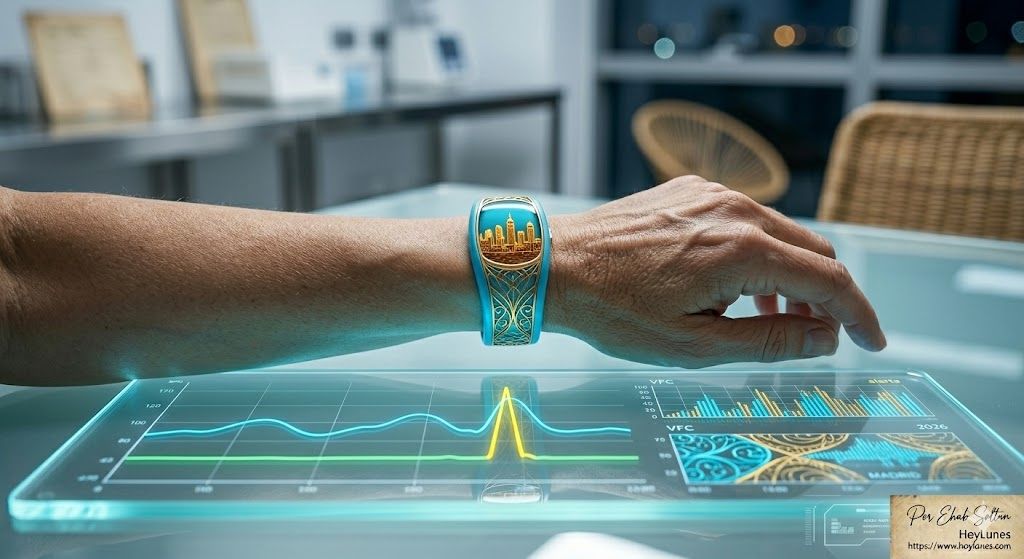
Real (not superficial) physiological monitoring:
Wearables must stop counting steps and calories to begin measuring real internal stress. This implies measuring Heart Rate Variability (HRV), knowing if your brain has truly “reset” at night, and measuring how much real endurance (resilience) you have left before collapsing.
Nutrition based on circadian timing:
It is not just what you eat, but when your body is physiologically prepared to process that thermal and glucidic load. It means eating when your body is metabolically “awake”, not when it is “programmed” to rest.
Corporate health redefined:
Stop seeing “wellness” as a superficial benefit and start understanding nocturnal metabolic regulation as a critical infrastructure. A misaligned system generates inefficiency and healthcare costs.
2026: Interpreting Signals Before Correcting Symptoms
We are entering a phase where health will not be managed by correcting excesses ex post, but by interpreting endogenous signals ex ante. The future of health is not fixing the disaster of eating poorly, it is preventing the body from asking you to eat poorly.
And the most powerful, persistent, and ignored signal is sleep. It is the number one indicator of your metabolic health. We all know we have to sleep, but we have not understood what it actually does: align the system. We have not understood that sleep is what sets all the clocks of your body.
You Do Not Need Discipline: You Need Synchronization
Perhaps the mistake was never “eating poorly”. Food is the final symptom.
Perhaps the mistake was trying to control with the mind a biological system that was already misaligned since the night before. Your mind cannot win against a decompensated body.
Because when the body is aligned:
Hunger self-regulates efficiently: you are hungry when you need nutrients, not when you are stressed.
Energy levels stabilize without pathological spikes all day.
Self-control decisions are simplified: saying “no” to sweets is easy because your rational brain is strong.
But when it is not:
You do not need more willpower. Forget it, it will not work.
You need to re-synchronize your biology. You need to set your biological clocks.
And that process does not start in the kitchen at 5:00 PM. The afternoon slump is not fixed in the afternoon. It begins, silently, every night, long before you realize it.
Your biology of tomorrow is decided tonight.
Documented Sources and Lines of Research
NIH – Sleep and metabolic regulation: Research on how sleep deprivation alters insulin sensitivity and appetite control at a central level.
[https://www.ncbi.nlm.nih.gov/pmc/articles/PMC535701/]
Harvard T.H. Chan – Sleep and obesity: Epidemiological and mechanical studies linking poor sleep quality to increased BMI and adiposity.
[https://www.hsph.harvard.edu/obesity-prevention-source/obesity-causes/sleep-and-obesity/]
Nature Reviews Endocrinology: Detailed analysis of the neuroendocrine mechanisms connecting circadian rhythm, sleep, and metabolic homeostasis.
[https://www.nature.com/articles/nrendo.2015.50]
Mayo Clinic – Sleep and hormones: Data on how sleep regulates the release of key hormones such as cortisol, growth hormone, and insulin.
[https://www.mayoclinic.org/healthy-lifestyle/adult-health/in-depth/sleep/art-20048379]
#MetabolicHealth #Sleep #Hormones #WomensHealth #HoyLunes #EhabSoltan #Neuroscience #Metabolism #Longevity #HealthTech #BiologicalRegulation #RealWellness